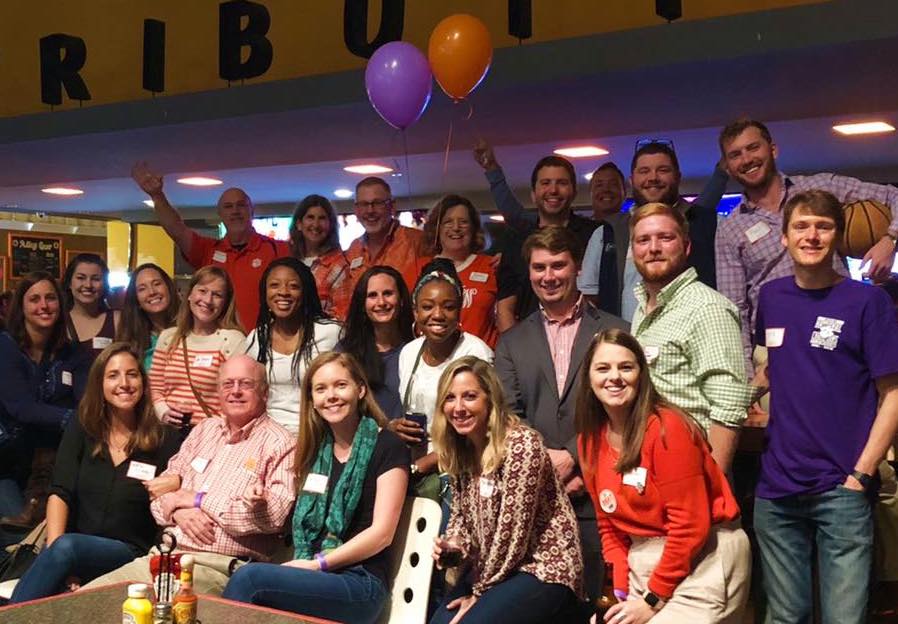
After three years leading Tigers for Tigers at Clemson and a fourth spent building the national coalition, I’d grown a skill set I was eager to keep using. I missed the organizational development, the community building, the work of bringing people together around something they cared about. So when I discovered the Clemson Young Alumni of Charleston, I showed up ready to contribute.
Not long after I joined, the president of the organization stepped away. And just like that, the org needed someone to step up.
So I did.
Your Network Is Your Starting Line
I didn’t have a strategic plan or a playbook. What I had was a genuine love for the Clemson community, a group of friends who felt the same way, and a strong instinct for how to get people in a room.
I started there: texting people I knew, getting friends to bring friends, and thinking carefully about who to invite. I didn’t just reach out to alumni. I invited anyone I knew who loved a good time, because I understood that energy is contagious and turnout matters. I also started promoting events on Facebook, inviting as many people as possible (reach is vital) and making sure every post had a clear reason to show up.
Clemson has one of the most passionate alumni bases in the country, so you might assume that the fanbase does the work for you. But that’s not how community works. A shared identity gets people interested. What gets them in the room is knowing it’ll be worth their time. From the very beginning, that was the standard I held every event to.
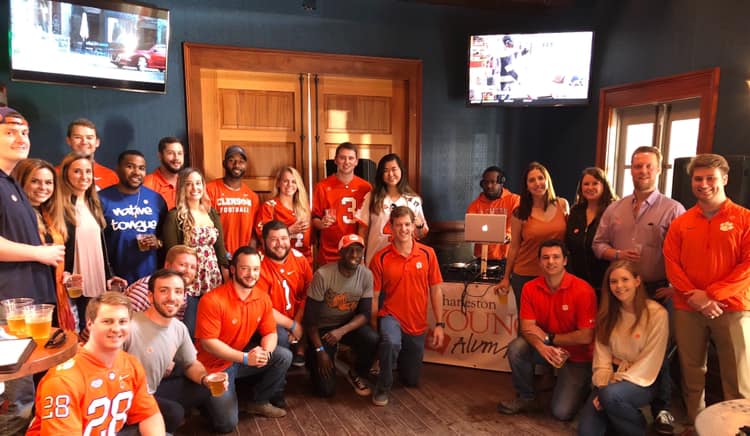
The results were immediate. That first watch party I helped organize drew 80 attendees. To put that in context, watch parties before I joined were averaging 12 people. Same concept, same city, same fanbase, just a different approach to outreach, promotion, and energy.
That gap, 12 versus 80, told me something important: the community was out there and ready to get involved. It just needed someone willing to go find it.
Ready or Not
For most of 2016 and into 2017, I served as Vice President, supporting the President and learning the operational side of running this tiny team. I planned three events that year, got comfortable with logistics and promotion, and started building the social media presence that would become a real asset for the org.
Then, midway through 2017, our President left the organization.
At that point, I had two choices: let the org go dormant, or take the wheel. I became President and immediately started thinking about what it would take to not just keep things running, but actually grow: the events, the community, and the team behind it all.
Building a Team That Wants to Be There
The hardest part of leading a volunteer organization isn’t planning events; it’s finding people who care enough to show up consistently, not just as attendees, but as contributors.
I drew on the grassroots instincts I’d developed over years of community building: reaching out personally, being honest about what I needed help with, and making it easy for people to say yes to small commitments first.
One of my biggest wins came in 2018, when a recent Clemson grad named Zach reached out to me asking how he could get involved. He took on budget management, helped me bring in more people, and became an indispensable partner in everything we did.
Over the next two years, we grew the leadership team from just myself to about six people. Our roles weren’t rigidly defined; we worked collaboratively, with everyone pitching in based on their strengths and availability. Some members focused on coordinating with local businesses and venue contacts. Others helped with volunteer organization outreach. Everyone helped spread the word and invite people to events. We held regular meetings to stay aligned, talk through challenges, and make decisions together.
That collaborative culture was intentional. Volunteer organizations live or die by whether people feel ownership. I wanted a team that genuinely wanted to be there, and that meant creating space for people to contribute in ways that felt meaningful to them.
The Numbers That Mattered
By 2018, my first full year as President, we had gone from 3 events annually to 8 in a single year. We were hosting networking happy hours, football watch parties, volunteer days, and our flagship annual event: a 4th of July harbor cruise that became the highlight of the young Clemson grads’ social calendar.
The harbor cruise alone grew from roughly 60 attendees in 2017 to 120 in 2018, double the turnout in a single year. Meanwhile, our Facebook following more than doubled over my tenure, and in 2019 I launched an Instagram account from scratch that grew to 185 followers within its first year.
None of that happened because of a big budget or a formal infrastructure. It happened because we built genuine relationships, showed up consistently, created content that connected, and made events people actually wanted to attend.
What Four Years Taught Me
Running the Clemson Young Alumni of Charleston for four years taught me that community doesn’t happen by accident. It takes someone willing to do the unglamorous work: the follow-up messages, the event flyers, the volunteer coordination, the last-minute venue changes, the conversations that don’t scale but matter anyway.
It also taught me that the best communities aren’t built top-down. They grow when people feel ownership, when they’re not just attendees, but contributors. My job was never to be the center of the community. It was to create the conditions for other people to find their place in it.
It’s the work that comes naturally to me, and the work I do best.